Seasonal Care
Hot Weather Safety for Dogs and Cats: A Practical UK Guide
Reduce heat risk with better timing, shade, water, travel decisions and a clear plan for recognising possible heatstroke.
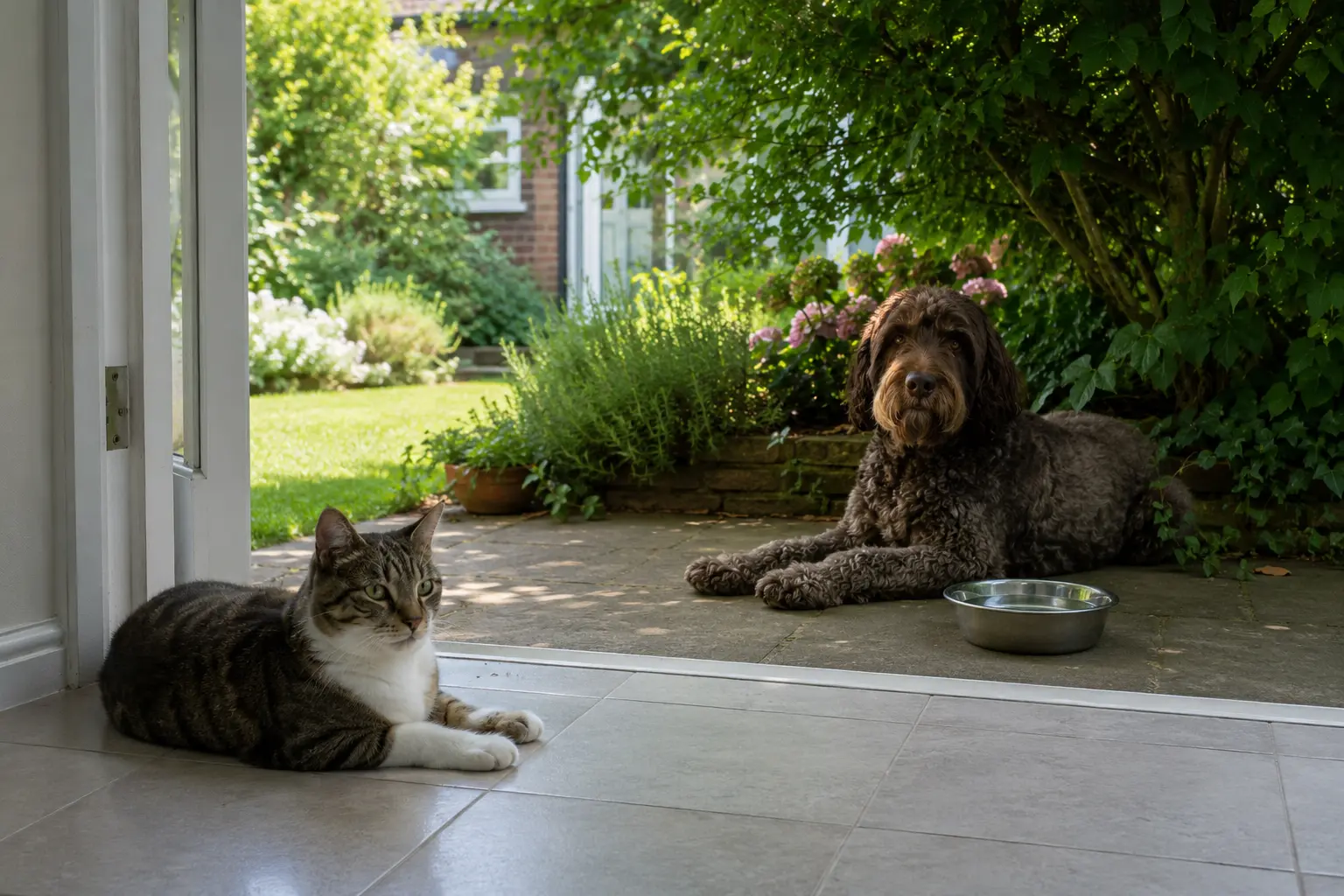
Change the plan before the pet overheats
Heat safety is mainly about avoiding exposure. Choose cooler times, reduce intensity and create reliable shade and water before your pet becomes distressed. Humidity, poor airflow, direct sun and hot surfaces can make a moderate air temperature harder to tolerate.
Flat-faced animals, older pets, puppies and kittens, overweight animals, thick-coated breeds and pets with heart, breathing or mobility problems can be at greater risk. Ask your vet for individual guidance if health affects temperature control.
Walk dogs when conditions are kinder
Move walks to early morning or later evening and choose shaded routes. On very hot days, a short toilet outing and indoor enrichment may be safer than maintaining the normal distance.
Check the ground with the back of your hand. If you cannot keep it there comfortably, paws may also be at risk. Tarmac, artificial grass and sand can hold considerable heat even when the air starts to cool.
- Carry water and offer it regularly.
- Keep exercise gentle and allow sniffing breaks.
- Avoid forced running beside a bicycle.
- Choose grass and shade where possible.
- Turn back at the first sign your dog is struggling.
Create a cooler home
Keep curtains closed on sun-facing windows where useful and maintain safe airflow. Provide several water bowls in separate places and refresh them regularly. Cooling mats may help some pets, but supervise introduction and remove damaged products.
Cats often seek cool tiles, baths or shaded rooms. Make those areas accessible and add water away from food and litter. Keep sheds, greenhouses and conservatories closed or checked so a cat cannot become trapped.
Do not shave a double-coated dog or cat simply because the weather is warm; coat can provide insulation and sun protection. Regular grooming to remove loose undercoat may help, but ask a qualified groomer or vet about the individual coat.
Treat vehicles as a high-risk environment
Never leave a pet in a parked car when heat could build, even for a short errand. Open windows and shade do not keep the interior reliably safe. Plan pet-free stops or take another person who can remain with the animal in a cooled vehicle.
During necessary travel, cool the car before loading, secure the pet away from direct sunlight and maintain ventilation. Carry water and allow suitable breaks.
Act promptly if heatstroke is possible
Move the animal away from the heat, contact a vet immediately and begin cooling while arranging transport. Use cool water rather than ice-cold water, keep air moving and follow the veterinary team's instructions. Do not cover the animal in wet towels that may trap heat as they warm.
Even if a pet appears to recover, internal injury may not be visible. Veterinary assessment is still important.
Plan enrichment for days spent indoors
Replace strenuous exercise with short training sessions, scent searches, puzzle feeding and calm play. Keep food portions appropriate because a less active day does not always require the usual treat load.
For cats, offer brief wand-toy sessions in cooler rooms and stop before panting or fatigue. Store string toys after use.
Use a daily heat checklist
- Forecast and humidity checked before exercise.
- Cool water available in more than one place.
- Shade and airflow remain available as the sun moves.
- Hot surfaces avoided.
- Vehicle trips reduced or planned safely.
- Every household member knows the emergency signs.
The safest hot-weather routine is flexible. Missing one long walk or changing a journey is a small cost compared with pushing through conditions your pet cannot safely manage.