Travel
Safe Car Travel with Dogs and Cats: A UK Checklist
Plan secure restraint, carrier training, breaks, temperature control and a calmer journey for everyday trips and holidays.
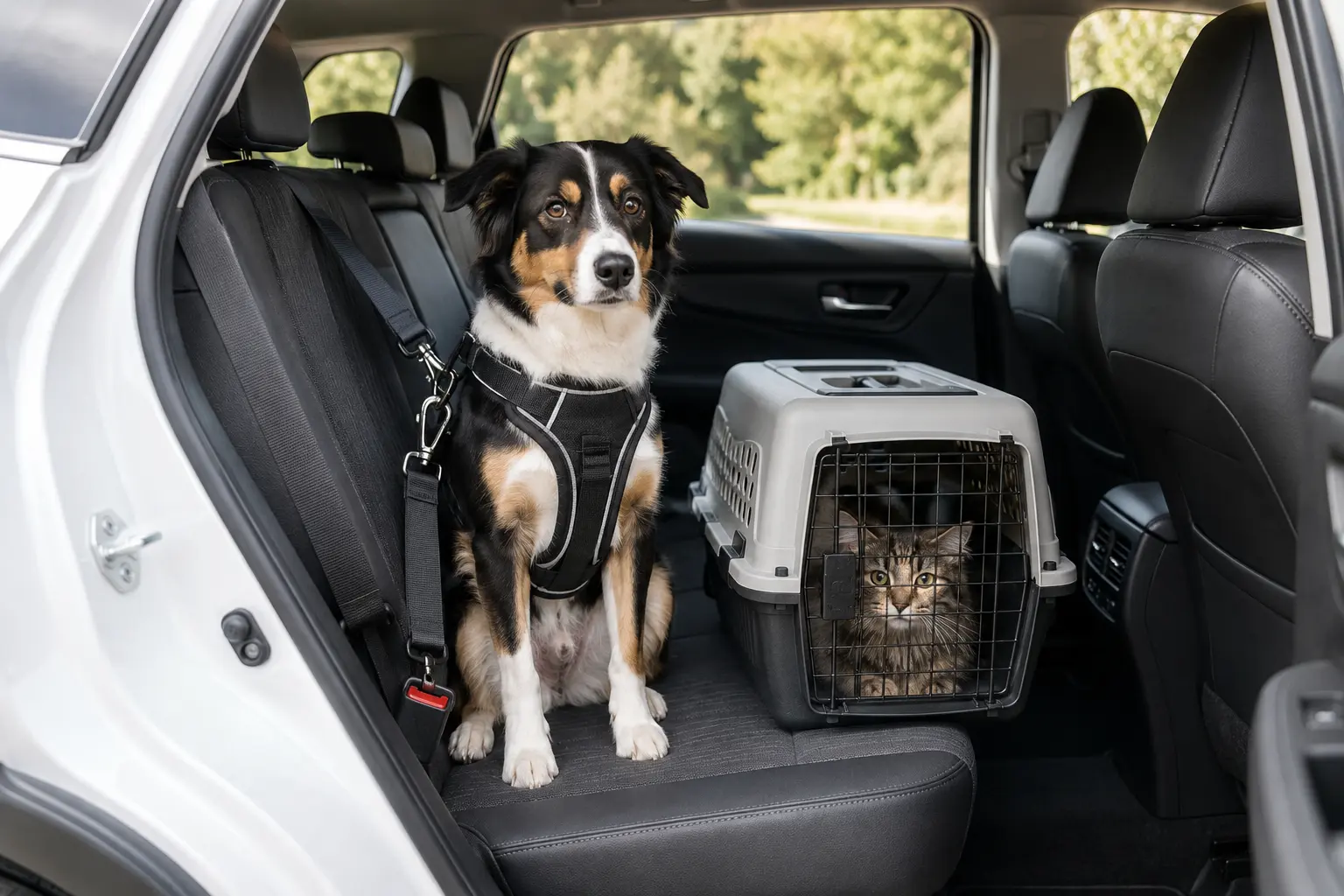
Secure the pet before the car moves
An unrestrained animal can distract the driver and be injured or thrown during sudden braking. Use a suitable secured carrier, travel crate, vehicle harness or dog guard according to the pet, vehicle and product instructions. A normal walking collar is not a safe point for a seat-belt attachment.
The restraint should prevent interference with the driver while allowing a natural resting position. Check that carriers and crates cannot slide, tip or become moving luggage.
Choose the right setup
Cats usually travel most safely inside a strong, well-ventilated carrier. It should be large enough to stand, turn and lie down, but not so vast that the cat is thrown across it. A top-opening or removable-roof design can make veterinary handling easier.
Dogs may use a crash-tested vehicle harness, secured crate or a guarded luggage area where suitable. Follow the exact attachment instructions; clipping a travel strap to the wrong loop can defeat the design.
- Restraint suits the species and body size.
- Carrier or crate is structurally sound.
- Attachment points match the maker's instructions.
- Air can circulate on every side.
- Loose bags cannot fall onto the pet.
- Identification and microchip details are current.
Build familiarity before a long trip
Leave the carrier open at home with familiar bedding and occasional treats inside. Feed nearby, then inside if the pet is comfortable. Practise closing the door briefly before moving the carrier.
For dogs, rehearse getting into the parked car, settling, then getting out. Progress to the engine running and very short journeys. For cats, covering part of the carrier with a light breathable cloth can reduce visual stimulation, but ventilation must remain clear.
Plan food, water and breaks
Avoid a large meal immediately before travel if your pet is prone to nausea, but do not change medication or withhold necessary food without veterinary advice. Carry familiar water, bowls, poo bags, litter supplies, bedding and cleaning materials.
On longer journeys, plan quiet safe stops. Dogs should leave the vehicle on a secure lead and harness. Cats should remain inside the closed vehicle or carrier unless there is a genuinely escape-proof area; opening a carrier at a service station creates a serious loss risk.
Reduce heat and motion stress
Cool the vehicle before loading, keep air moving and prevent direct sun from falling on the carrier. Watch for heavy panting, drooling, repeated swallowing, vomiting, agitation, weakness or collapse. Stop safely and seek veterinary advice when signs are significant.
If journeys repeatedly cause fear or sickness, speak to your vet before the next necessary trip. Behaviour preparation and prescribed medication may help; never use human travel medicine or sedatives without veterinary direction.
Pack a simple travel file
- Veterinary and out-of-hours contact numbers.
- Medication in original packaging.
- Insurance details and relevant health records.
- Recent photograph of the pet.
- Destination rules and accommodation confirmation.
- Cleaning kit and spare bedding.
For international travel, check current official rules well before booking because microchip, rabies, health-document and route requirements can change.
Check the return journey too
Inspect harnesses, carrier doors and attachments before every leg. Allow the pet to settle in a secure room on arrival, with water and toileting access before social activity begins.
A calm journey starts days before departure. Familiar equipment, short practice sessions and a securely planned vehicle setup are more effective than improvising once a frightened pet is already in the car.