Dogs
New Puppy Checklist: What You Actually Need Before Bringing a Puppy Home
A practical, uncluttered checklist for the first days at home, covering safety, sleep, feeding, travel, training and veterinary preparation.
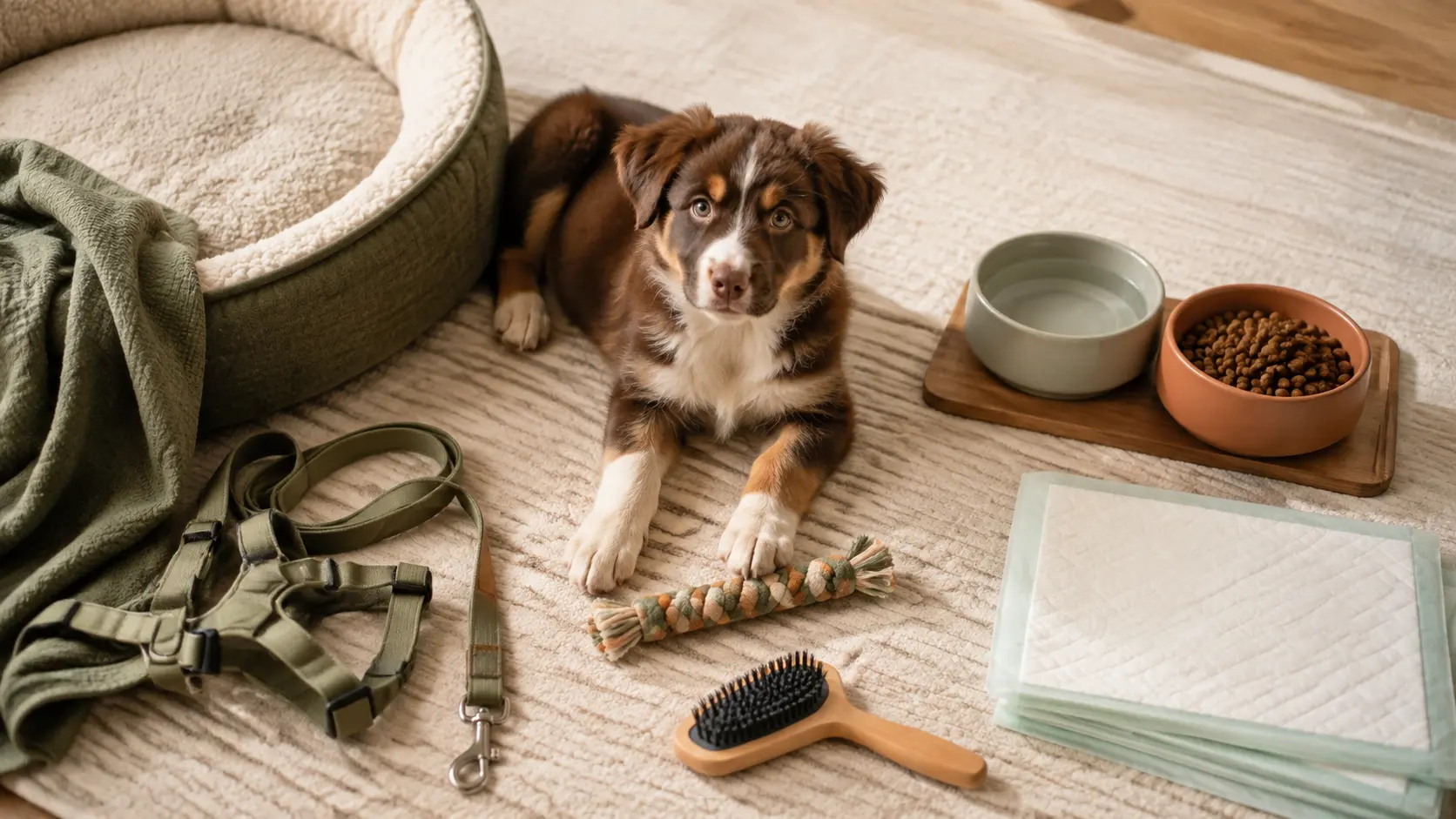
Buy for the first fortnight, not the next ten years
Puppies grow quickly and their preferences change. Begin with safe, correctly sized basics, then add items once you understand your puppy's sleeping style, chewing habits and routine. This avoids a house full of expensive equipment that does not fit or get used.
Food and water
Ask the breeder or rescue which food, portion and meal schedule the puppy currently follows. Keep that food for the first few days unless a vet recommends a change. A sudden new diet on top of travel and a new home can upset digestion.
- At least one week's supply of the current complete puppy food.
- Two stable, easy-clean bowls.
- A kitchen scale or reliable measuring scoop.
- Small training treats that can be broken into tiny pieces.
- A sealed container for food, with the original label and batch details retained.
A safe place to sleep
Choose a washable bed and a quiet sleeping area away from draughts and busy doorways. A correctly sized crate or puppy pen can help create a calm, secure space, but it should be introduced positively and never used as punishment.
For the first nights, placing the sleep area near you can make toilet trips and reassurance easier. Expect interrupted sleep and plan who will respond before the puppy arrives.
Collar, harness, lead and identification
Choose lightweight equipment that fits now rather than something the puppy will grow into. You should be able to check the fit easily and recheck it every few days during fast growth.
- Soft, adjustable collar.
- Comfortable, adjustable harness that does not restrict the shoulders.
- Standard fixed-length lead for early training.
- ID tag with the legally required owner details.
- Contact details ready for the microchip database.
Toilet training and cleaning
Decide where you want your puppy to toilet and make that spot easy to reach. Take them out after waking, eating, play and excitement, and reward calmly when they use the right place.
- Pet-safe enzymatic cleaner for accidents.
- Poo bags kept beside every exit.
- Puppy pads only if they suit your housing and training plan.
- Washable throws for beds, sofas or the car.
Avoid punishment after accidents. It does not teach the correct location and can make a puppy hide when they need to go.
Chewing, play and early training
Provide a small rotation of puppy-safe toys with different functions: a soft toy, a suitable chew, a food-stuffable toy and an interactive toy used with supervision. Check toys frequently and remove anything that is splitting or small enough to swallow.
A reward pouch, clicker if you plan to use one, and a lightweight house line can support short training sessions. Focus first on name response, settling, handling, recall foundations and exchanging objects rather than demanding long periods of obedience.
Grooming and handling
Even short-coated puppies benefit from calm practice with paws, ears, mouth and brushing. Choose tools for the actual coat type and keep sessions brief.
- Gentle puppy shampoo for occasional use.
- Suitable brush or comb.
- Dog toothbrush and dog toothpaste, never human toothpaste.
- Nail-care plan with your vet, groomer or an experienced handler.
Travel and home safety
Use a secure carrier, travel crate or suitable vehicle restraint from the first journey. Never allow a puppy to travel loose in the car.
Move medicines, cleaning products, cables, batteries, shoes and small objects out of reach. Check gardens for gaps and toxic plants. Use stair gates where needed, block unsafe balconies and make sure every household member knows which doors must stay closed.
Veterinary and admin checklist
- Register with a veterinary practice before collection day.
- Confirm vaccination, worming and flea-treatment records.
- Check the microchip and update keeper contact details.
- Arrange appropriate pet insurance or an emergency-care fund.
- Keep the breeder or rescue contract and health records together.
- Save the daytime vet and out-of-hours emergency numbers.
The most valuable preparation is not another accessory. It is a calm first-week plan with time for sleep, frequent toilet trips, gentle socialisation and consistent house rules.
Keep reading