Dogs
Senior Dog Care Checklist: Comfort, Mobility and Daily Routine
Small, practical adjustments for sleep, movement, feeding, toileting, grooming and spotting changes that should not be dismissed as ageing.
Ageing is individual
Senior is not one exact birthday. Size, breed, previous injuries and health history all influence when a dog begins to need extra support. Look for changes from your own dog's normal pattern rather than comparing them with another dog of the same age.
Slower movement can reflect stiffness or pain; altered sleep may accompany discomfort or cognitive change; house-soiling can have urinary, digestive, mobility or neurological causes. These changes deserve assessment rather than being written off as old age.
Make rest easier
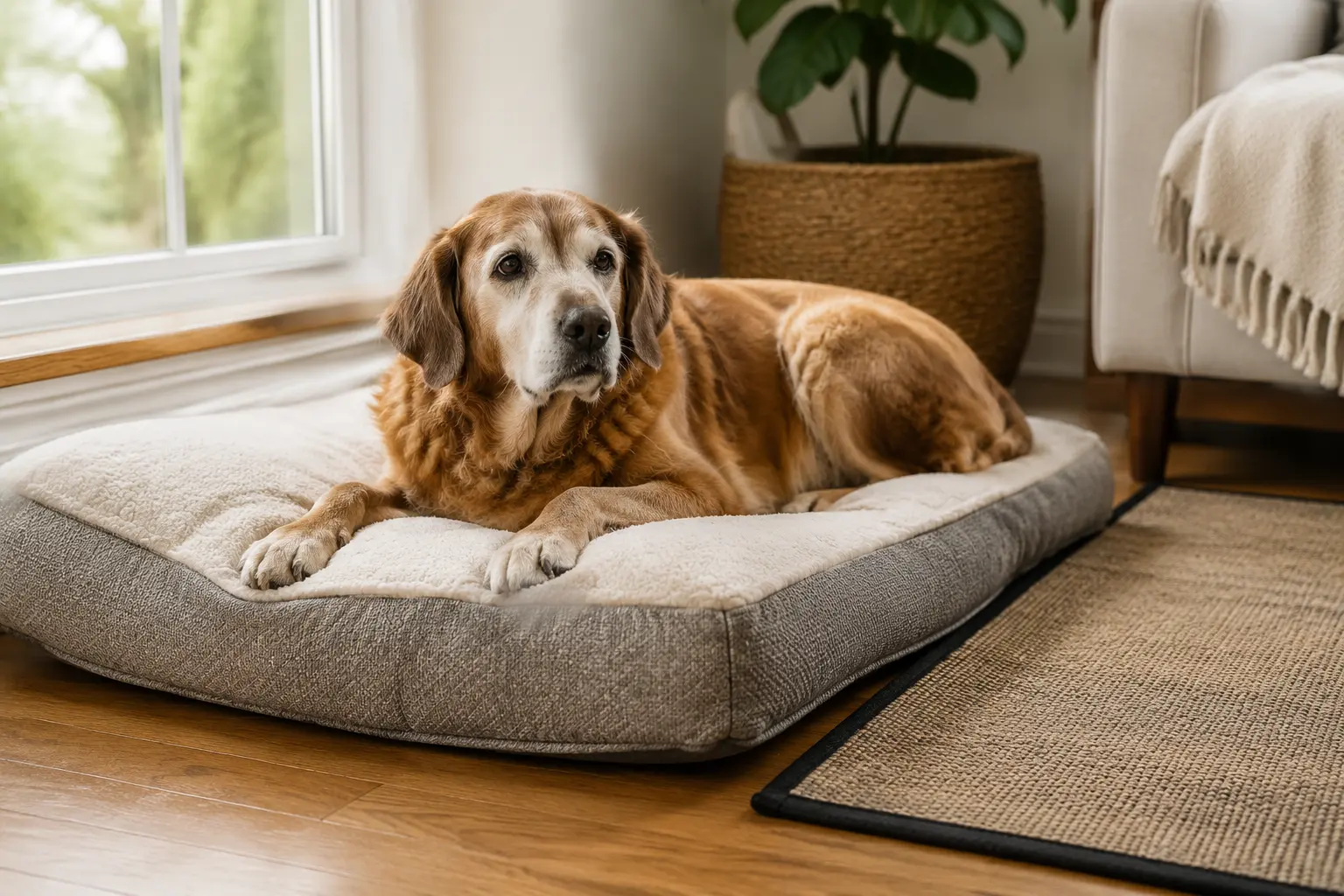
Provide a supportive, washable bed in a warm, quiet place where the dog can still feel part of family life. Some older dogs prefer more than one bed so they do not need to follow people between floors. Keep water within easy reach without forcing a difficult journey over slippery flooring.
Use non-slip runners or mats on smooth routes. Add a stable ramp or shallow step where it genuinely reduces jumping, and teach its use with rewards before the dog urgently needs it. Block stairs if balance is unreliable.
- Bed supports the whole body and is easy to enter.
- Main routes have reliable grip.
- Food, water and toileting are easy to reach.
- Nails and paw hair are kept at a length that supports traction.
- The dog can avoid children or other pets when resting.
Adjust exercise without removing it
Regular comfortable movement helps preserve routine, mobility and mental engagement. Many older dogs do better with shorter, more frequent walks than a long weekend outing. Allow time to sniff and choose gentle routes with secure footing.
Watch how your dog feels later that day and the following morning. Lagging behind, repeated stopping, limping, reluctance to rise or a marked increase in panting can mean the activity was too much.
Feed the dog in front of you
An older dog does not automatically need a food labelled senior, but they do need complete nutrition appropriate to their condition. Monitor weight and body condition because both excess fat and loss of muscle can reduce mobility.
Measure portions, keep treats modest and mention appetite or swallowing changes to your vet. Dental pain, nausea, reduced smell and illness can all alter eating. Do not add supplements or sharply restrict protein because of age alone; diagnosed conditions need individual veterinary nutrition advice.
Protect toileting dignity
Offer more frequent opportunities, especially after sleep, meals and before bed. Improve lighting and keep the route short. A coat may help some dogs in cold weather, while a ramp can make garden access easier.
New accidents, straining, blood, increased thirst, frequent urination or diarrhoea need a health check. Washable bedding and absorbent layers can protect the home while the cause is investigated, but they should not replace care.
Keep grooming and handling gentle
Check skin, coat, ears, mouth, nails and any lumps during brief comfortable sessions. Support the body rather than holding a painful leg in the air. Mats can pull delicate skin, so seek professional help if they cannot be removed comfortably.
Record the location and size of lumps and let your vet examine new or changing ones. Do not assume a lump is harmless from appearance alone.
Build a simple monthly record
- Weight and body condition.
- Ease of rising, walking and using stairs.
- Appetite, thirst and toileting.
- Sleep, interaction and response to familiar cues.
- New lumps, dental changes or grooming difficulty.
- Medication supply and any side effects.
Small home adjustments can make a large difference, but they work best alongside regular veterinary reviews. The goal is not to make an older dog behave young; it is to protect comfort, choice and the routines they still enjoy.
Keep reading