Health
Dog Dental Care at Home: A Simple Routine That Works
Build a realistic tooth-brushing routine, choose safer dental products and recognise the mouth changes that need veterinary attention.
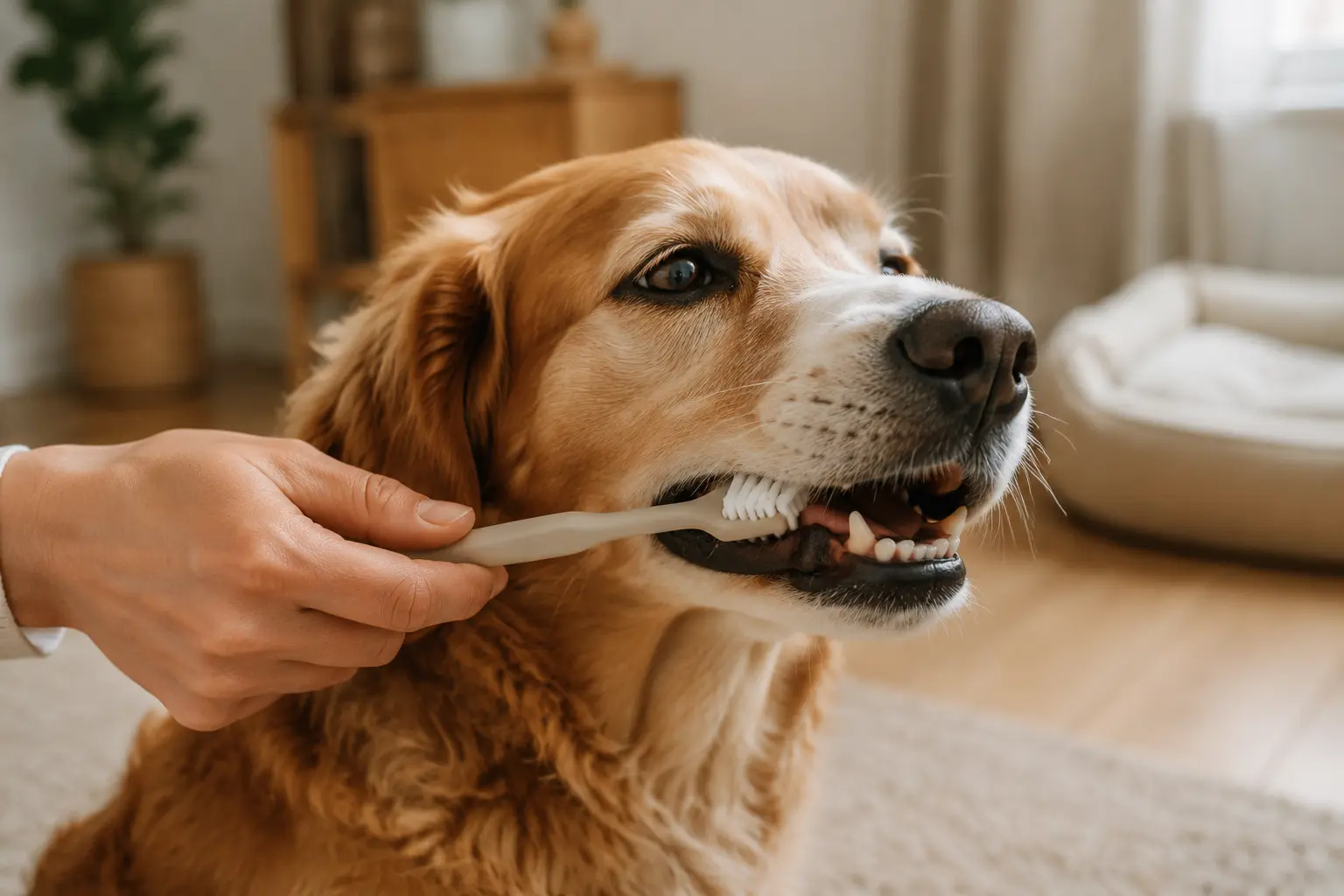
Make brushing the main habit
Plaque forms continually and can harden into tartar. Daily tooth brushing is the most useful home routine for disrupting plaque before it builds up. Dental chews, special diets and water additives may support care, but they do not make an uncomfortable or diseased mouth healthy again.
Use toothpaste made for dogs. Human toothpaste can contain ingredients that are unsafe when swallowed, and dogs cannot rinse and spit. Choose a soft dog toothbrush, finger brush or small-headed brush that reaches the outside surfaces without forcing the mouth open.
Introduce it in tiny steps
Start when your dog is relaxed and stop before they struggle. The first sessions are about trust, not cleaning every tooth.
1. Touch the cheek briefly, reward and finish. 2. Lift the lip for one second, reward and finish. 3. Let the dog taste a little dog toothpaste from your finger. 4. Rub the outside of one or two teeth with a finger or soft cloth. 5. Introduce the brush, then slowly extend the time over several days.
Keep sessions calm and predictable. Five comfortable seconds every day is a better foundation than a long weekly battle. If your dog guards their mouth, has a bite history or appears painful, ask your vet for help instead of forcing handling.
Brush the surfaces that matter most
Hold the brush at a slight angle where the tooth meets the gum. Use small gentle movements along the outside surfaces, concentrating on the large cheek teeth and canine teeth. You do not usually need to prise the jaw open to reach the inner surfaces.
Aim to brush daily. If that is not immediately possible, build frequency gradually and keep the routine attached to a reliable event such as the final evening walk.
- Dog toothpaste, never human toothpaste.
- A clean, suitable brush.
- Short sessions with rewards.
- Gentle pressure at the gum line.
- A routine that can be repeated most days.
Treat dental products as support
Choose chews of an appropriate size and supervise their use. Extremely hard objects can fracture teeth; a product that cannot be indented at all with a fingernail deserves caution. Remove pieces that become small enough to swallow.
Dental diets and products with independent evidence may help reduce plaque or tartar for some dogs. Calories from edible chews still count, so reduce other treats or part of the main ration as appropriate. Do not let a dental label distract from choking risk, digestive tolerance or the dog's individual medical needs.
Check the mouth without diagnosing it yourself
Once a week, look for red or bleeding gums, heavy brown tartar, broken or loose teeth, swelling, sores or anything stuck in the mouth. Also notice behaviour: dropping food, chewing on one side, pawing at the face, resisting head handling, eating more slowly or losing interest in hard food.
Contact your veterinary practice if you see pain, bleeding, swelling, a damaged tooth, a mouth mass, sudden strong odour or difficulty eating. Facial swelling, uncontrolled bleeding, major trauma or inability to close the mouth needs urgent advice.
Professional care is different from cosmetic cleaning
Tartar visible above the gum can be only part of the problem. A veterinary dental assessment can examine below the gum line and identify painful teeth. Anaesthesia-free scraping may make a tooth look cleaner without treating disease beneath the gum, and a conscious dog cannot receive a full examination and safe treatment.
Home care and veterinary care work together. Start gently, repeat often and let comfort guide the pace. The best routine is the one your dog accepts and you can maintain throughout their life.