Nutrition
Is Your Dog a Healthy Weight? A Practical Body-Condition Guide
Use body shape, measured portions and a steady record to manage weight without relying on breed averages or guesswork.
The scale is only one part of the answer
Two dogs of the same breed can have different healthy weights because frame, muscle, age and sex vary. Use weight alongside body condition: what you can see and feel around the ribs, waist and abdomen.
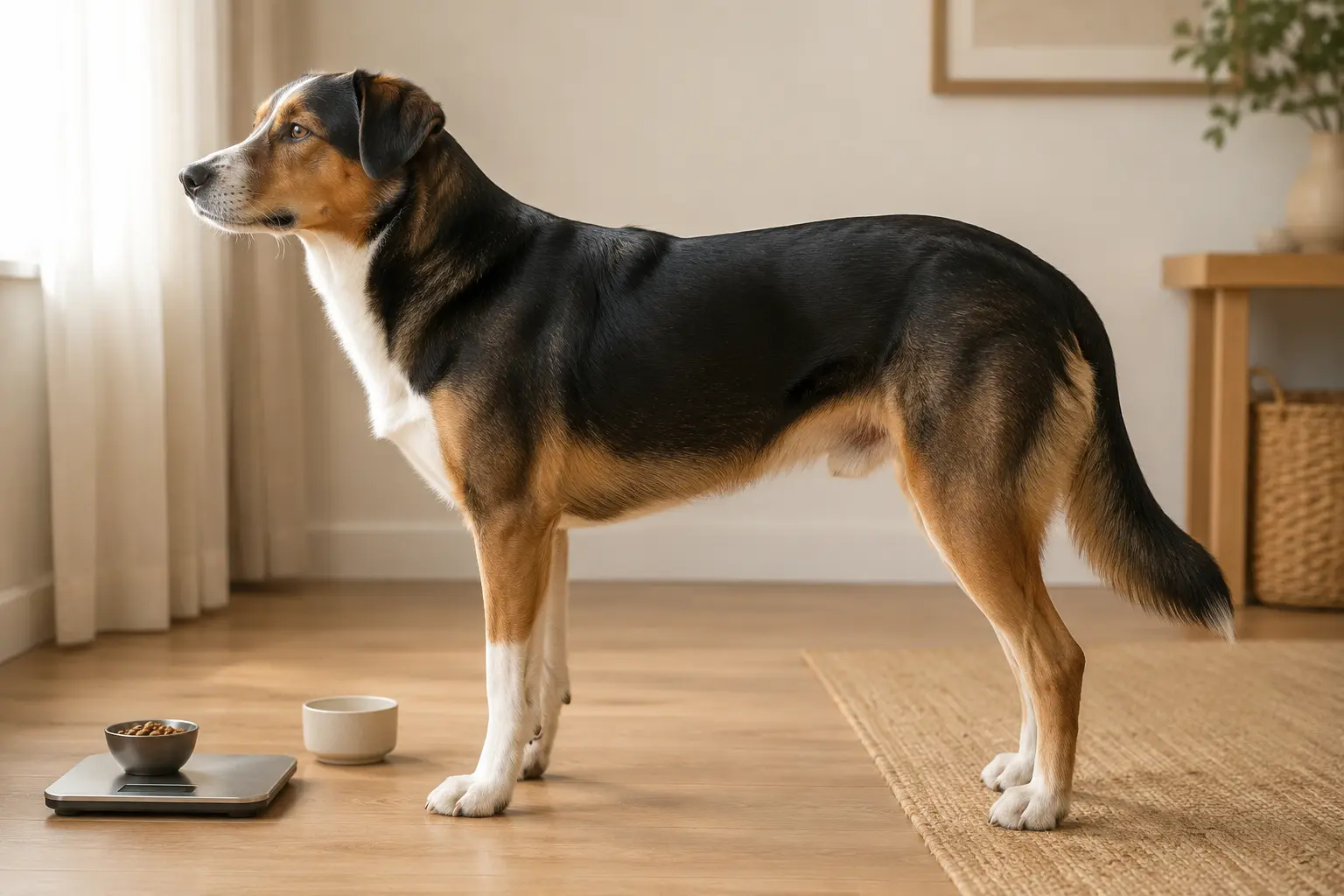
At an ideal condition, ribs should usually be easy to feel beneath a light covering, a waist should be visible from above and the abdomen should rise behind the ribs when viewed from the side. Thick coats can hide shape, so use your hands as well as your eyes.
Check the same way each month
Stand your dog on a level surface. Run both hands lightly over the ribcage without pressing hard. Look from above for a waist, then from the side for an abdominal tuck. Take simple photographs from the same angles and record the weight on the same reliable scale where possible.
- Ribs difficult to feel and little or no waist can suggest excess body fat.
- Very prominent ribs, spine or hip bones can suggest the dog is too thin.
- A round abdomen, fluid or a sudden shape change is not something to manage with a diet guess.
Ask your veterinary team to demonstrate a body-condition score. Their hands-on assessment can separate fat, muscle loss, coat and normal body shape more accurately.
Measure everything that supplies calories
Start with a complete food for the correct life stage and weigh the daily portion on a kitchen scale. Cups and scoops can vary from serving to serving. Divide the weighed amount between meals rather than measuring each bowl independently.
Include training rewards, chews, dental products, leftovers and food used in puzzle toys. A small extra given by several family members can become a large part of a small dog's daily energy.
One practical approach is to reserve part of the normal ration for training. Keep higher-value treats small and infrequent, and avoid replacing balanced meals with extras.
Make changes slowly and deliberately
If your vet agrees weight loss is needed, use a realistic target and review interval. Simply cutting a normal maintenance food too severely can reduce essential nutrients as well as calories; a purpose-designed weight-management food may be more suitable for some dogs.
Increase activity according to age, fitness, breathing, joints and weather. Several manageable walks, scent games and gentle play are often easier to sustain than one exhausting session.
Track trends, not daily noise
Body weight can move slightly with hydration, meals and toileting. Review the trend over weeks using the same scale and similar conditions. Record the food amount, treats, activity and any medication changes so the result has context.
A useful review asks:
- Can the ribs be felt more easily without becoming prominent?
- Is a waist becoming visible?
- Is energy and movement comfortable?
- Is the planned food amount being followed by everyone?
- Has the veterinary team reviewed progress at the agreed time?
Know when weight change may be medical
Unexpected loss or gain can occur with illness, pain, hormonal disease, digestive problems, medication or fluid changes. Arrange a veterinary check if weight changes without a planned reason, or if it comes with thirst, urination changes, vomiting, diarrhoea, appetite change, weakness, coughing, breathing difficulty or a swollen abdomen.
A healthy-weight plan should protect muscle, comfort and nutrition, not chase a perfect number. Consistent portions, a monthly body check and steady appropriate activity give you a much clearer compass than appearance alone.
Keep reading