Walking
How to Choose and Fit a Dog Harness and Lead
A practical guide to harness shape, fit, lead choice and the checks that make everyday walks safer and more comfortable.
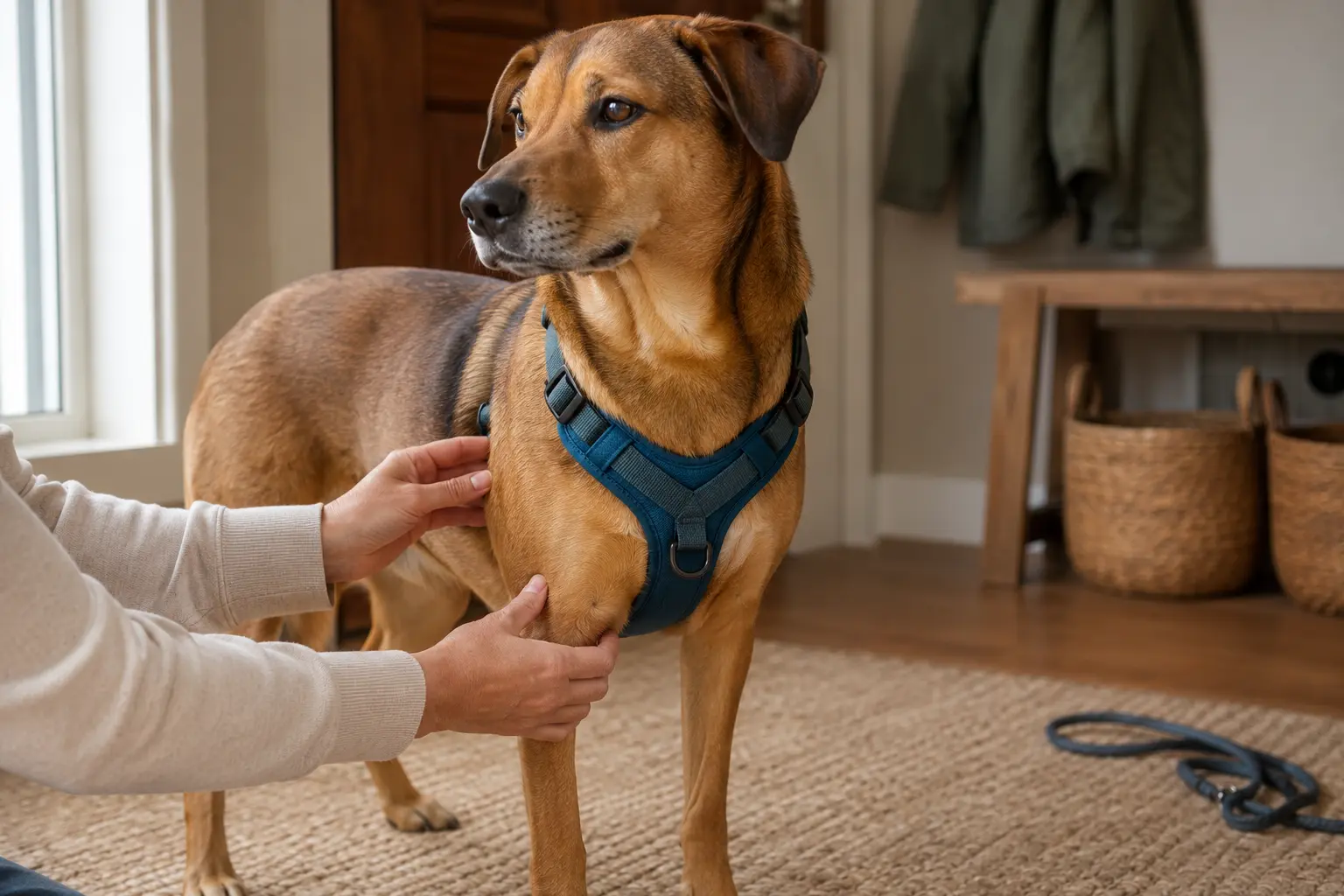
Start with the dog and the walk
A good harness should keep your dog secure without rubbing, pinching or changing the way the shoulders move. The best design depends on body shape, strength, age, coat, handling needs and the places you walk. A narrow puppy, deep-chested sighthound and broad adult dog may need very different shapes even at a similar weight.
Decide what the equipment must do. Everyday pavement walks, long-line recall practice, car travel and support for an older dog are different jobs. One carefully fitted harness may cover several needs, but no single product is automatically right for every activity.
Choose a useful harness shape
Look for a shape that sits around the chest rather than across the throat. The front should avoid pressing into the soft neck, and the straps should not cut through the armpits. Adjustable points around the neck and chest make it easier to fit dogs between standard sizes.
- Y-shaped fronts often allow useful shoulder clearance when correctly sized.
- A front attachment can give extra steering, but it should not twist the harness or replace loose-lead training.
- A back attachment is simple for ordinary walking and long lines.
- A second belly strap can add security for dogs that reverse out of normal harnesses.
- Handles can help in specific situations, but lifting a dog by a normal walking harness may be unsafe.
Measure rather than guess
Use a soft tape around the widest part of the chest, usually just behind the front legs. Measure the lower neck where the harness will sit and weigh the dog if the maker uses weight bands. Compare the actual measurements with that brand's size chart; a medium in one range may not match another.
If the dog falls between sizes, check which version offers enough adjustment without leaving long loose straps. Keep the receipt and try the harness indoors before removing labels.
Run a calm fit check
Fasten the harness while your dog is standing naturally. You should normally be able to slide two fingers beneath the straps, but the fit must still prevent escape. Check that buckles do not sit on elbows or prominent bones.
Watch your dog walk, turn, sit and lower their head. The harness should stay centred and should not rotate sharply when light lead pressure is applied. Recheck after ten minutes because straps can settle into the coat.
- The throat is free from pressure.
- Front legs can reach forward normally.
- Straps remain clear of the armpits.
- The dog cannot back out when gentle backward pressure is tested indoors.
- Buckles and adjusters do not rub.
- The contact details on the ID tag remain readable.
Match the lead to the job
A fixed-length lead gives clear, predictable handling in streets and busy places. A longer training line can create freedom in a suitable open area while recall is developing. Attach a long line to a well-fitted harness rather than allowing sudden force on the neck, and keep it away from roads, cyclists and crowded paths.
Retractable leads can build speed before the line stops and are harder to gather quickly. If you use one, reserve it for spacious, low-risk settings and never wrap the cord around a hand.
Maintain the equipment
Check stitching, clips, webbing and reflective sections every week. Rinse off salt, sand and mud, follow the washing instructions and let everything dry fully. Replace equipment after significant damage, chewing or a hard impact.
Puppies and dogs changing weight need frequent refitting. A harness that was correct last month can become tight or insecure surprisingly quickly. Comfortable equipment supports a good walk, but patient reward-based training is what teaches a dog to move calmly with you.