Cats
Indoor Cat Essentials: Food, Litter, Toys and Enrichment
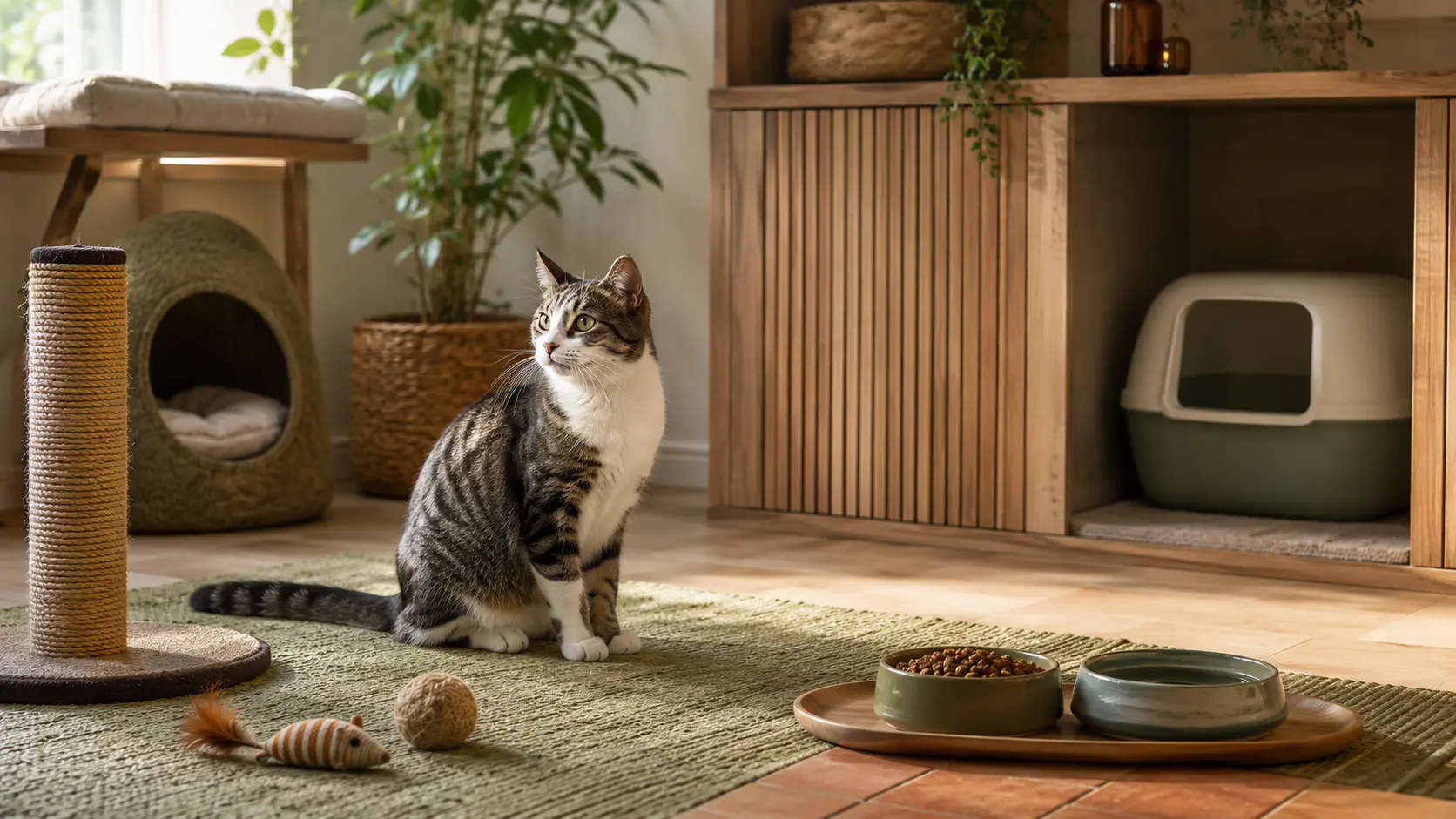
Create a calm indoor setup with separate resources for eating, drinking, toileting, scratching, climbing, hiding, play and rest.
Think in resources, not just products
An indoor cat needs choices and control over important resources. Food, water, litter, sleep, hiding, scratching and play should not all be crowded into one corner. Spreading them through the home helps a cat avoid areas that feel busy, exposed or associated with toileting.
For more than one cat, provide multiple separated resources so one cat cannot quietly block another. Cats that appear to share may still prefer independent routes and resting places.
Food and water
Choose a complete cat food for the correct life stage and measure the daily amount. Indoor cats can gain weight when free feeding, treats and reduced activity combine, so review body condition regularly rather than relying only on the pack guide.
Many cats prefer water away from food and litter. Offer wide bowls that do not press on the whiskers, refresh water daily and try more than one location. A fountain can help some cats drink, but it still needs frequent cleaning and a normal bowl should remain available during introduction.
- Complete food for kitten, adult or senior needs.
- Food bowl or puzzle feeder.
- Two or more water points.
- Kitchen scale for consistent portions.
- Treat allowance included in the daily total.
Litter trays that cats will actually use
A common starting point is one tray per cat plus one extra, placed in separate quiet locations. Side-by-side trays can feel like one resource rather than two.
Choose a tray large enough for the cat to turn and dig comfortably. Many cats prefer unscented, fine-textured litter and an open tray, although individual preferences vary. Scoop at least daily and wash with a mild, cat-safe product without leaving a strong fragrance.
Scratching, climbing and hiding
Scratching is normal communication, stretching and claw maintenance. Provide a tall, stable vertical post and a horizontal option so your cat can show you what they prefer. Put scratchers near sleeping places and commonly used routes, not only where they are least visible.
Vertical territory expands the usable home. A secure cat tree, shelf route or window perch lets a cat observe without being approached. Add covered beds, boxes or other hides in quiet areas, including at least one place where children or other animals cannot follow.
Play that resembles hunting
Short interactive sessions are often more engaging than leaving a large pile of toys on the floor. Use a wand toy to create small prey-like movements, allow the cat to catch it, then finish with a small food reward or meal.
Rotate a few safe toys every several days. Remove string, ribbon and small swallowable parts when play is not supervised. Laser toys can create frustration if the cat never catches a physical target, so finish by directing the cat to a toy or treat they can capture.
Food puzzles and scatter feeding can add movement and problem-solving. Start easy so the cat succeeds, especially with kittens, seniors and cats new to puzzle feeders.
A calm daily rhythm
Cats often value predictability. Keep meals, play and quiet time reasonably consistent while still offering choice. Provide sunny and shaded rest areas and protect long periods of uninterrupted sleep.
Watch for subtle stress signs: hiding more, overgrooming, conflict around resources, reduced play, appetite changes or toileting outside the tray. A behaviour change deserves a health check before it is treated as a training problem.
Indoor safety
- Fit secure screens where windows or balconies could allow a fall or escape.
- Store lilies, medicines, cleaning products, string and small objects safely.
- Check washing machines, tumble dryers and reclining furniture before use.
- Keep identification and microchip details current, even for indoor cats.
- Use a secure carrier for every journey.
- Keep routine veterinary care and parasite advice up to date.
The essential setup at a glance
- Complete food and measured portions.
- Food and water in separate suitable locations.
- Enough large, clean litter trays.
- Vertical and horizontal scratching surfaces.
- High resting places and private hides.
- Safe interactive toys and simple food puzzles.
- A secure carrier and an accessible veterinary plan.
A successful indoor setup is not the one with the most equipment. It is the one that lets the cat eat, drink, toilet, rest, hide, climb, scratch and play without competition or unwanted pressure.
Keep reading