Cats
New Kitten Checklist: What You Need for a Calm First Week
Prepare food, litter, hiding places, scratching, travel and veterinary care without overwhelming a kitten in a new home.
Begin with one safe room
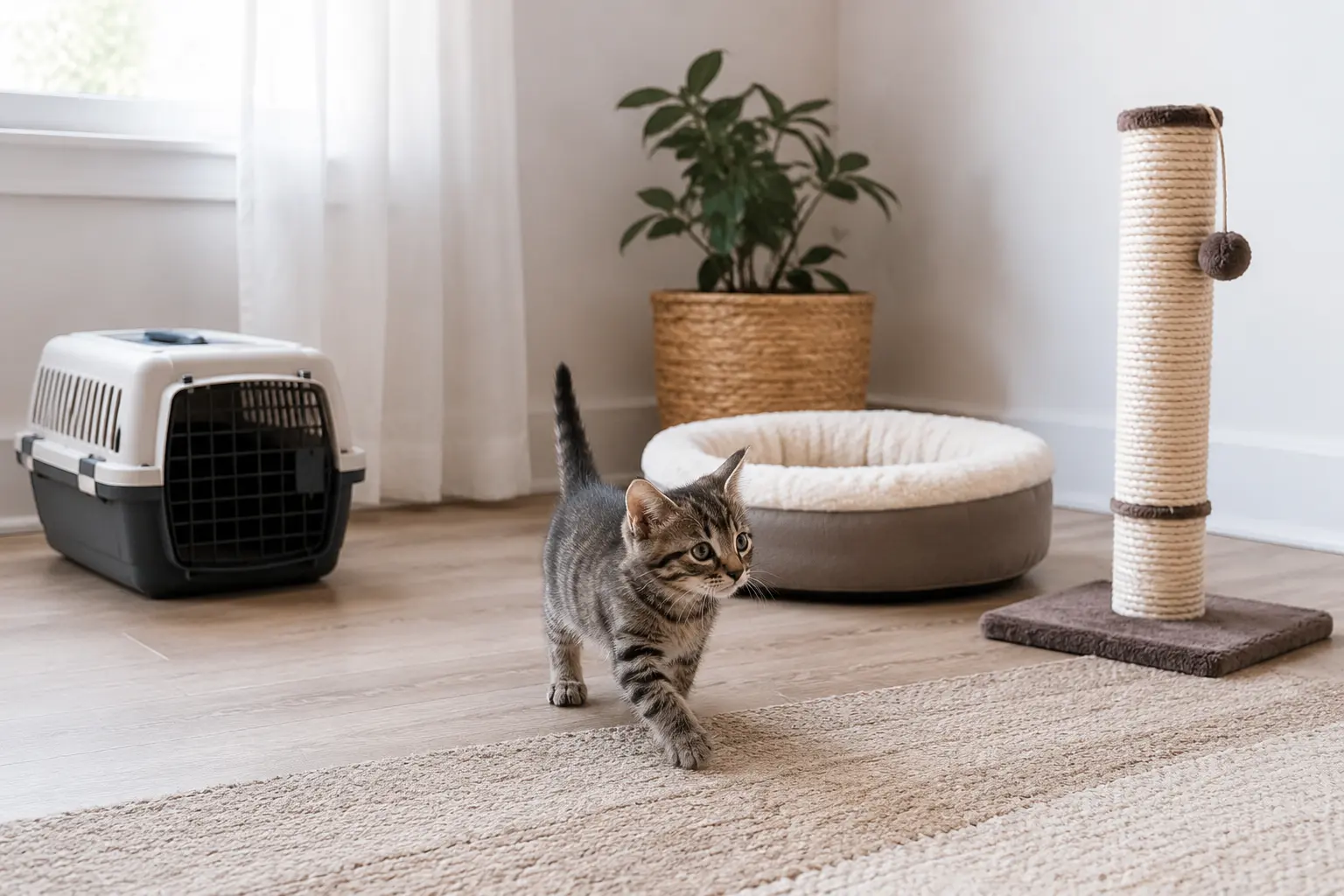
A whole home can feel enormous to a kitten. Prepare one quiet room before arrival, away from busy entrances and household noise. Add food, water, litter, a bed, a scratching surface, toys and at least one hiding place, but keep these resources separated rather than lined up together.
Let the kitten emerge from the carrier in their own time. Sitting quietly nearby is more useful than repeatedly lifting them out of a hide. Expand access gradually once they eat, drink, toilet and explore confidently.
Keep familiar food at first
Ask the breeder or rescue for the exact food, portion and schedule the kitten currently follows. Bring home enough for at least a week. If you later change food, do it gradually unless your vet advises otherwise.
Choose food labelled complete for kittens. Growing cats need nutrition designed for development; treats, toppers and complementary foods cannot replace a balanced kitten diet.
- Initial supply of the familiar complete kitten food.
- Shallow, easy-clean food bowls.
- More than one water point, away from food and litter.
- Kitchen scale for repeatable portions.
- Feeding instructions shared with every household member.
Set up litter for easy success
Use a large, accessible tray in a quiet place the kitten can reach without crossing a frightening area. Unscented fine litter is a useful starting point, particularly if it matches the previous home. Scoop at least daily and avoid strongly scented cleaners.
For more than one cat, provide one tray per cat plus one extra in separate locations. Do not punish accidents. Clean them calmly and review access, tray size, litter, stress and health.
Provide hiding, height and scratching
A cardboard box on its side can be an excellent hide. Add a secure raised option when safe, because many cats feel calmer when they can observe from above. Never pull a kitten out of a hiding place unless there is immediate danger.
Offer a sturdy vertical scratching post tall enough for a full stretch and a horizontal scratcher. Place one close to the sleeping area and another near an important route. Reward use rather than frightening the kitten away from furniture.
Choose play that teaches good habits
Use wand toys and lightweight balls to create short hunting-style sessions. Let the kitten catch the toy, then finish calmly. Keep string, ribbon, elastic bands and small pieces locked away when not supervised.
Hands and feet should not become prey. If teeth or claws catch skin, stop movement and redirect to a suitable toy. Kittens need frequent sleep, so allow play to end rather than keeping them awake for visitors.
Prepare for travel and healthcare
Choose a strong, well-ventilated carrier that can be secured in the car. Leave it open in the safe room with bedding inside so it becomes familiar rather than appearing only before stressful journeys.
Register with a veterinary practice and confirm vaccination, parasite treatment, neutering and microchip plans. Keep records from the breeder or rescue. Insurance or a dedicated emergency fund should be arranged before a problem develops.
- Secure carrier and familiar bedding.
- Veterinary registration and emergency number.
- Vaccination and parasite records.
- Microchip details checked and updated.
- Insurance or emergency-care budget.
- Toxic plants, medicines, cables and small objects secured.
Introduce family members slowly
Allow one calm person at a time and let the kitten choose whether to approach. Children should sit quietly and avoid carrying or cornering the kitten. Keep dogs on a lead or behind a barrier during controlled introductions, and give resident cats separate resources and a gradual scent-first introduction.
The first week is successful when the kitten feels safe enough to eat, rest, explore and use the tray. Confidence grows from choice and predictability, not from meeting everyone immediately.
Keep reading