Cats
Cat Litter Tray Problems: A Practical Troubleshooting Guide
Work through health, tray number, size, litter, location, cleaning and household stress when a cat toilets outside the tray.
Treat a change as information
Toileting outside the tray is not spite. A cat may be experiencing pain, urgency, fear, difficulty reaching the tray or a strong preference for another surface. Start with the cause rather than punishment, which can increase stress and make the problem harder to understand.
Arrange a veterinary check for a new or recurring change. Urinary disease, constipation, diarrhoea, arthritis and other conditions can alter where or how a cat toilets.
Count trays as separate resources
A useful starting point is one tray per cat plus one extra, placed in different locations. Three trays touching one another may feel like one toileting area and can all be blocked by the same cat, dog, appliance or frightening event.
Every cat should have a quiet route to a tray without passing a rival. In a multi-level home, include a tray on each regularly used floor. Older cats and kittens may need shorter routes and lower entrances.
Check size and access
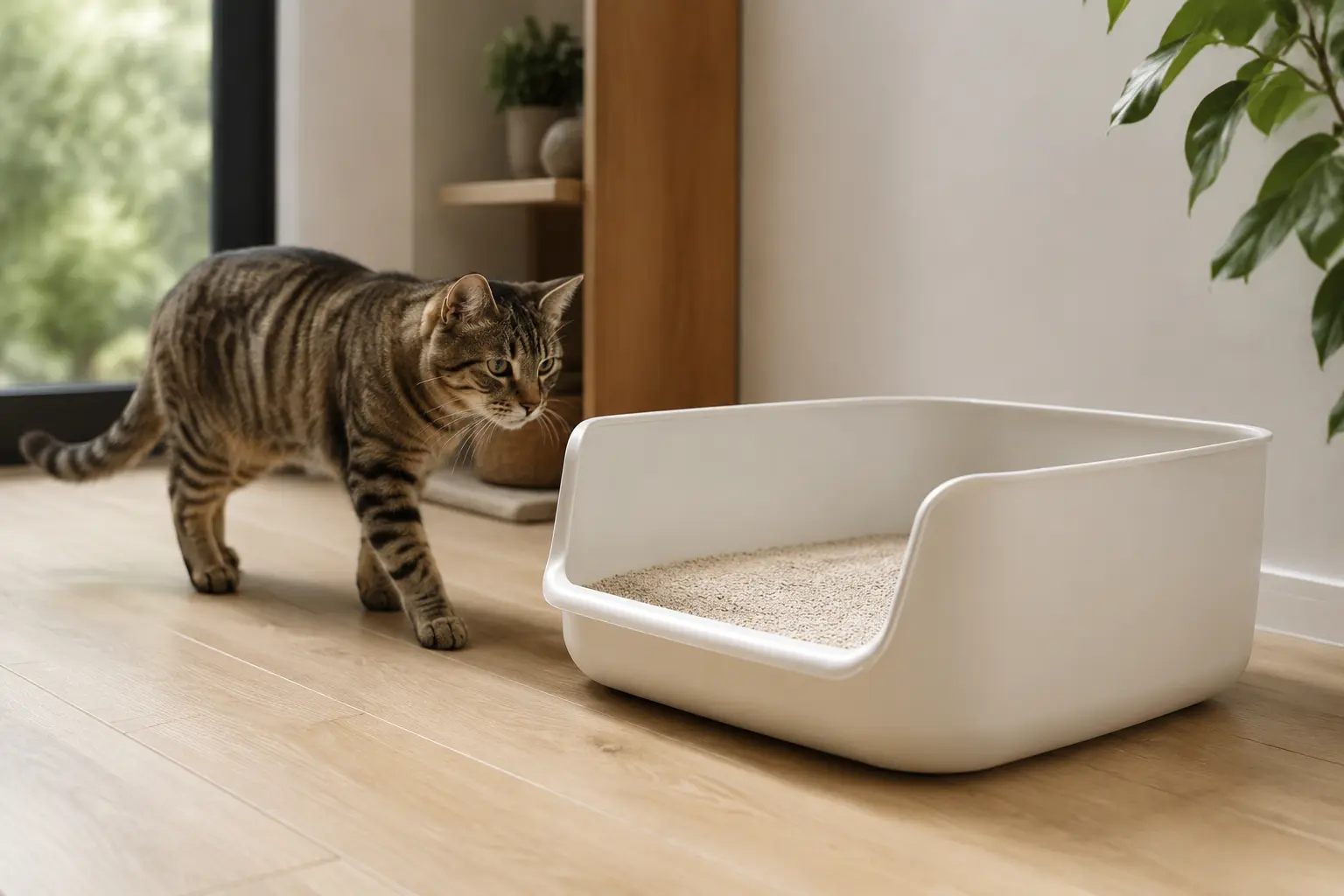
Many commercial trays are too small. The cat should be able to enter, turn, dig and adopt a natural posture without touching every side. A large storage box with a safely cut entrance can work for some cats.
Covered trays offer privacy for certain cats but trap odour and can create one exit that another animal guards. Start with a large open tray unless your cat clearly prefers a cover. Remove swinging doors during a trial.
- Tray is long and wide enough for comfortable turning.
- Entrance is manageable for the cat's mobility.
- The cat cannot be cornered inside.
- A dog or child cannot interrupt toileting.
- The tray is available at all times.
Review litter and depth
Unscented, fine-textured litter is a sensible starting point, but individual preferences matter. Sudden changes in material, fragrance or depth can cause avoidance. If you want to change litter, offer the new type in an additional tray instead of replacing every tray at once.
Remove waste at least daily and top up as needed. Wash the tray regularly with a mild cat-safe product, rinse well and avoid leaving a strong smell. Replacing all familiar scent every day can be unsettling, while a heavily soiled tray may be unacceptable.
Move away from noise and traps
Place trays away from food, water, beds and busy doorways. Washing machines, boilers and tumble dryers can start suddenly. Glass doors may expose a toileting cat to outdoor cats. Narrow cupboards and dead-end corridors can feel unsafe.
Observe the route as well as the tray. A confident cat can still avoid it if another pet waits outside.
Clean accidents without creating a marker
Blot fresh urine and use a pet-safe enzymatic cleaner suitable for the surface. Avoid ammonia-based products, which may smell urine-like to a cat. Do not carry the cat to the accident, shout or rub their nose in it.
Temporarily place a tray near a repeatedly chosen location if practical, then move it gradually after reliable use. Prevent access only after providing an acceptable alternative.
Keep a short record
- Date, time and whether urine or faeces was passed.
- Location and surface chosen.
- Which trays were clean and accessible.
- Household changes, visitors or conflict.
- Appetite, thirst, stools and visible discomfort.
- Veterinary findings and treatment.
A good solution often combines medical care with several small environmental improvements. Give the cat more than one clean, quiet and easy choice, then judge the pattern over time rather than one isolated accident.
Keep reading