Cats
How to Redirect Cat Scratching Without Punishment
Choose stable scratching surfaces, place them where cats need them and protect furniture while a better habit becomes rewarding.
Scratching is a need, not misbehaviour
Cats scratch to stretch, maintain their claws and leave visible and scent messages. The goal is not to stop scratching; it is to make an acceptable surface easier and more satisfying than the sofa, carpet or door frame.
Punishment can make a cat fearful without removing the need. The cat may simply wait until nobody is watching.
Copy the successful target
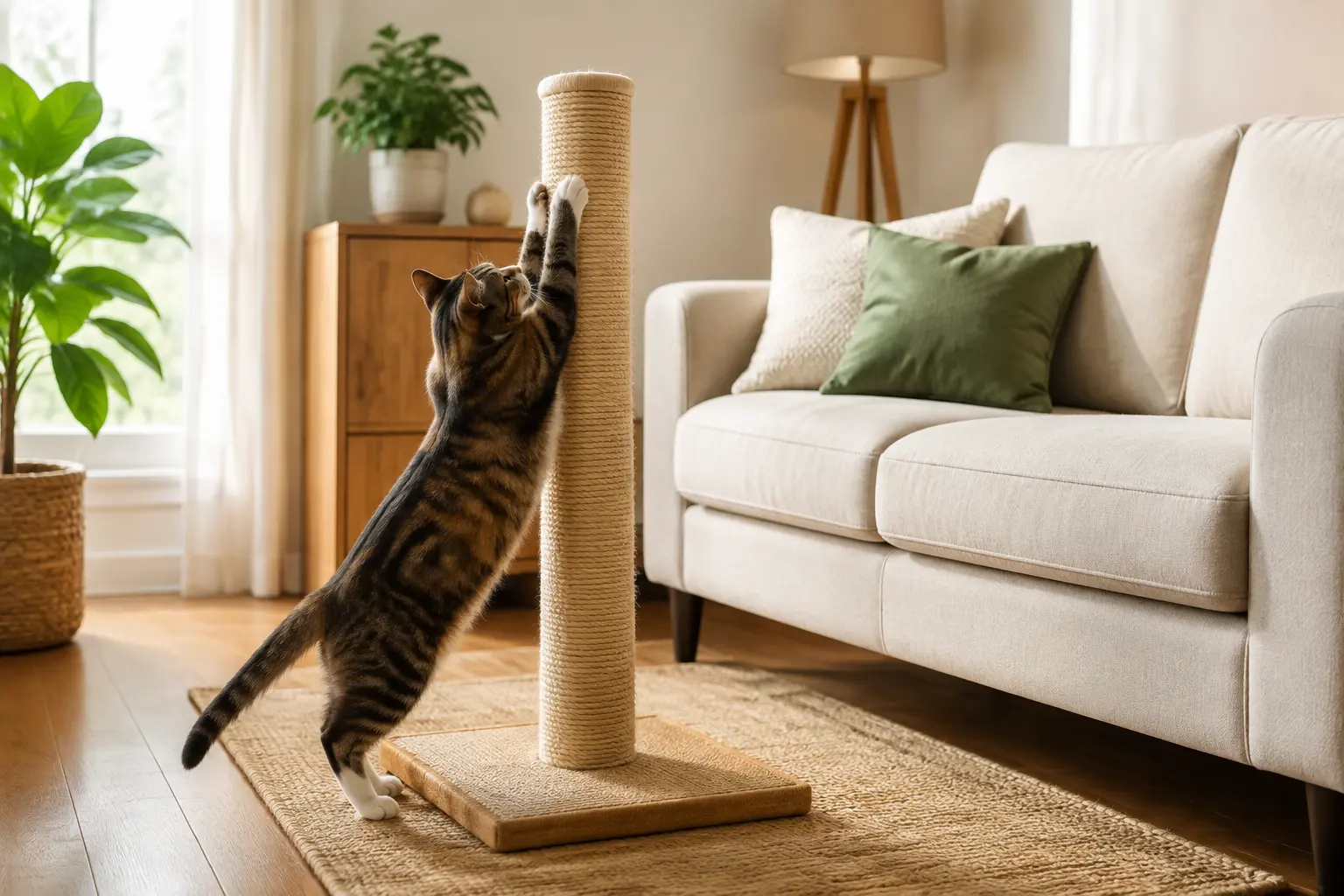
Look closely at what the cat already chooses. A sofa arm suggests a tall vertical surface with resistance. Carpet scratching suggests a flat or gently angled scratcher. Door frames may indicate a need to mark an important route.
Match four features:
- orientation: vertical, horizontal or angled;
- material: sisal, cardboard, wood or another safe texture;
- stability: no wobbling or sliding;
- size: enough room for a full-body stretch.
Offer more than one style if the preference is unclear. A small post that tips during the first use can teach a cat to avoid it.
Put scratchers where the behaviour happens
Placement matters as much as the product. Put a new scratcher directly beside the damaged area at first. Add another near a favourite sleeping place, because cats often scratch after waking, and one near a prominent route or room entrance.
Hiding every post in a spare room removes much of its value to the cat. Once a scratcher is used reliably, move it only a small distance at a time if necessary.
Make the new choice rewarding
Play with a wand toy around the scratcher so the cat places paws on it naturally. Reward investigation and use with a small treat, praise or another activity the cat enjoys. Catnip or silver vine may attract some adult cats but not all.
Never hold the cat's paws and drag them down the post. This can create discomfort and avoidance.
- Scratcher matches the chosen orientation.
- It does not wobble, fold or slide.
- It is tall or long enough for a full stretch.
- It sits beside the current scratching point.
- The cat is rewarded for choosing it.
Protect furniture during retraining
Cover the target temporarily with a tightly fitted throw, suitable furniture protector or another texture the cat finds less rewarding. Keep loose plastic, pins, sticky products and anything chewable out of reach. Test any protector on a hidden part of the furniture first.
Clean the area with a material-safe product to reduce accumulated scent, then position the alternative directly in front. Protection works best when paired with a good replacement; blocking every target without adding resources can move the behaviour elsewhere.
Provide enough options for multiple cats
Place scratchers in separate areas so one cat cannot control access. Each cat may prefer a different texture or height. Scratching can increase around doorways and shared routes when cats feel social pressure, so also review hiding places, high resting areas, food, water and litter resources.
Maintain claws and scratchers
Replace cardboard when it collapses and secure loose fibres before they become a swallowing or entanglement risk. Many cats prefer a visibly used post, so do not replace it merely because it looks untidy if it remains safe.
Check claws regularly, especially in older or less active cats. Overgrown claws can catch and grow into the pad. Ask a vet, nurse or groomer to demonstrate trimming if it is needed; never cut without identifying the sensitive quick.
A successful scratching setup follows the cat's existing clues. Match the angle, texture, location and stability, then reward the right surface and give the new habit time to become established.
Keep reading